
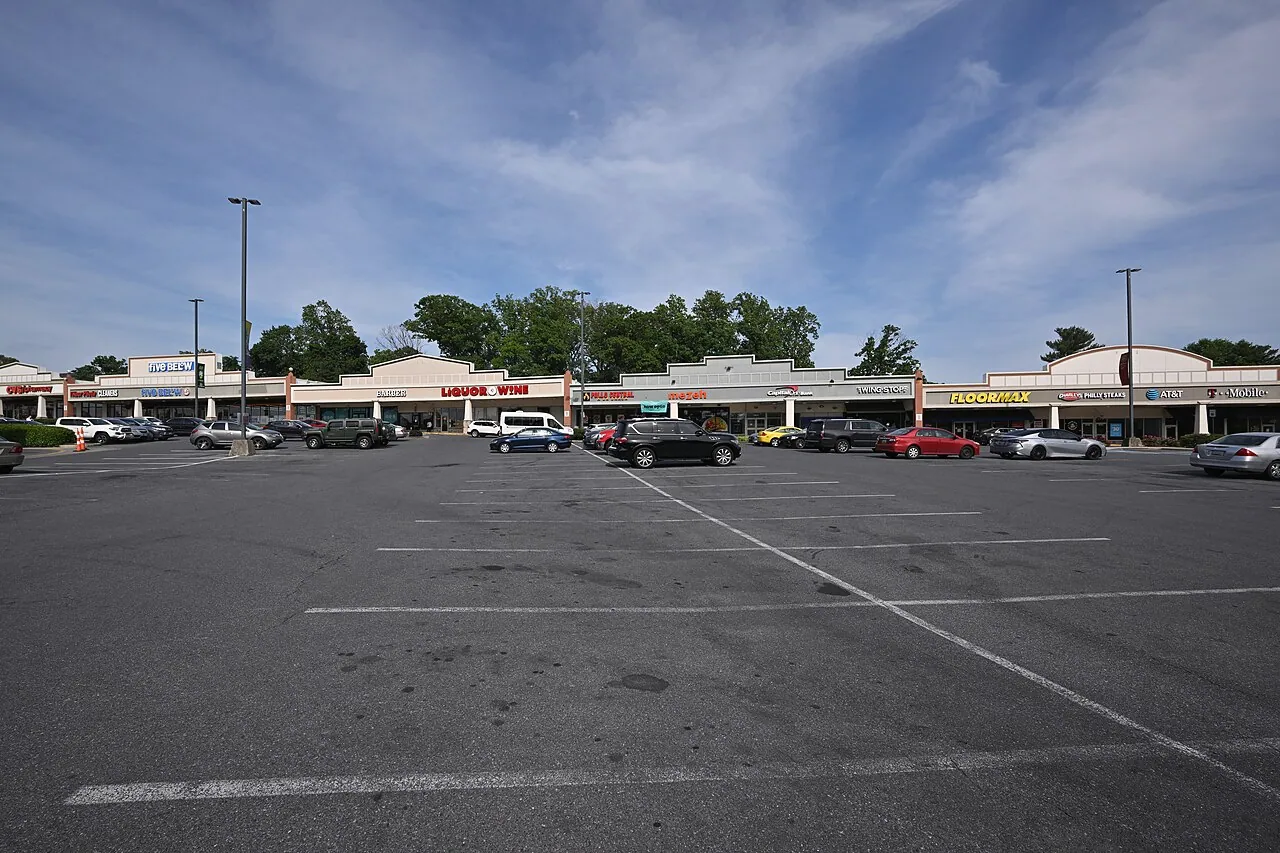
A parking deck space costs real money to build. The median structured parking space in the country cost $33,300 this year, according to the consulting firm WGI, as reported by Building Design+Construction. For decades, North Carolina towns could require a set number of those spaces for every apartment, store or church, whether anyone parked there or not. The renter paid for it either way.
That ends on Jan. 1, 2027 for most of the state.
What it does
House Bill 162, now Session Law 2026-39, bars any zoning rule that requires "an off-street parking lot to meet a minimum number of parking spaces per development or structure, regardless of occupancy or use." It applies to cities and counties alike.
Local governments in the 20 coastal counties are exempt, except on historic properties, according to the law's text and the NC League of Municipalities. A second section lets redeveloped sites skip new stormwater controls on pavement that already exists, and lets local governments offer voluntary incentives instead. The parking section takes effect Jan. 1, 2027, the UNC School of Government notes.
The bill took an unusual path. It started as a background check bill for local government job applicants, and the Senate replaced it entirely, according to the UNC Legislative Reporting Service. The final version passed the Senate 44 to 1 and the House 111 to 2. Gov. Josh Stein signed it July 6.
The bottom line
Towns can still regulate how parking is built, from accessible spaces to EV charging and driveways, the School of Government explains. They can no longer force a builder to build a set number of spaces. Builders decide how much parking the market wants.
Projected payout
The legislature published no fiscal note, and no state agency estimated the savings. The outside estimates vary widely:
| Estimate | Source | Type |
|---|---|---|
| $33,300 median cost per structured space, 2026, national | WGI, via Building Design+Construction | Industry survey |
| $5,000 to $10,000 per surface space; $25,000 to $65,000 per deck space | Rep. Donnie Loftis, via HousingWire | Sponsor's claim |
| $30,000 to $40,000 per space | CREDA, via WUNC | Industry group claim |
| Renters with garage parking pay about $1,700 a year for it, about 17% of rent | Gabbe and Pierce, Housing Policy Debate (2017), via UCLA | Peer-reviewed, national |
Every required space a builder no longer has to build is thousands of dollars, and in a deck tens of thousands, that does not have to be recovered through rent. How much of that reaches renters depends on whether builders actually build less parking.
What can happen
Best case. Builders put homes where parking used to go. Small lots near transit and downtowns become buildable. Less pavement means less runoff; the Catawba Riverkeeper says one inch of rain on one acre of pavement makes more than 27,000 gallons of runoff, WUNC reported. Rents grow more slowly in new buildings.
Worst case. Little changes. Charlotte developers told Axios they expect to keep building parking. Greystar's Andrew Phelan put it simply: "in the city of Charlotte, people like to drive." Where parking is short, cars spill onto neighborhood streets, and cities that never managed street parking have to start. The savings stay with builders instead of reaching renters.
Both sides
Gov. Stein said on signing: "This change will lower rents for people." Rep. Loftis, the lead sponsor, asked Reason: "why do we have to have so much parking that's unused?" Sen. Ted Alexander told Governing it was "really ingenious because it has so many positive benefits to so many different spheres."
No opponent went on record. The NC League of Municipalities first opposed the bill over local control, Governing reported, and the League says it pushed for changes on public safety and service-vehicle access. The three members who voted no gave no public reasons.
What to watch
Charlotte's ordinance rewrite before Jan. 1. Local stormwater ordinances must be amended within 12 months. And the first site plans filed in 2027 with fewer spaces than the old rules required, and what those buildings charge in rent.