
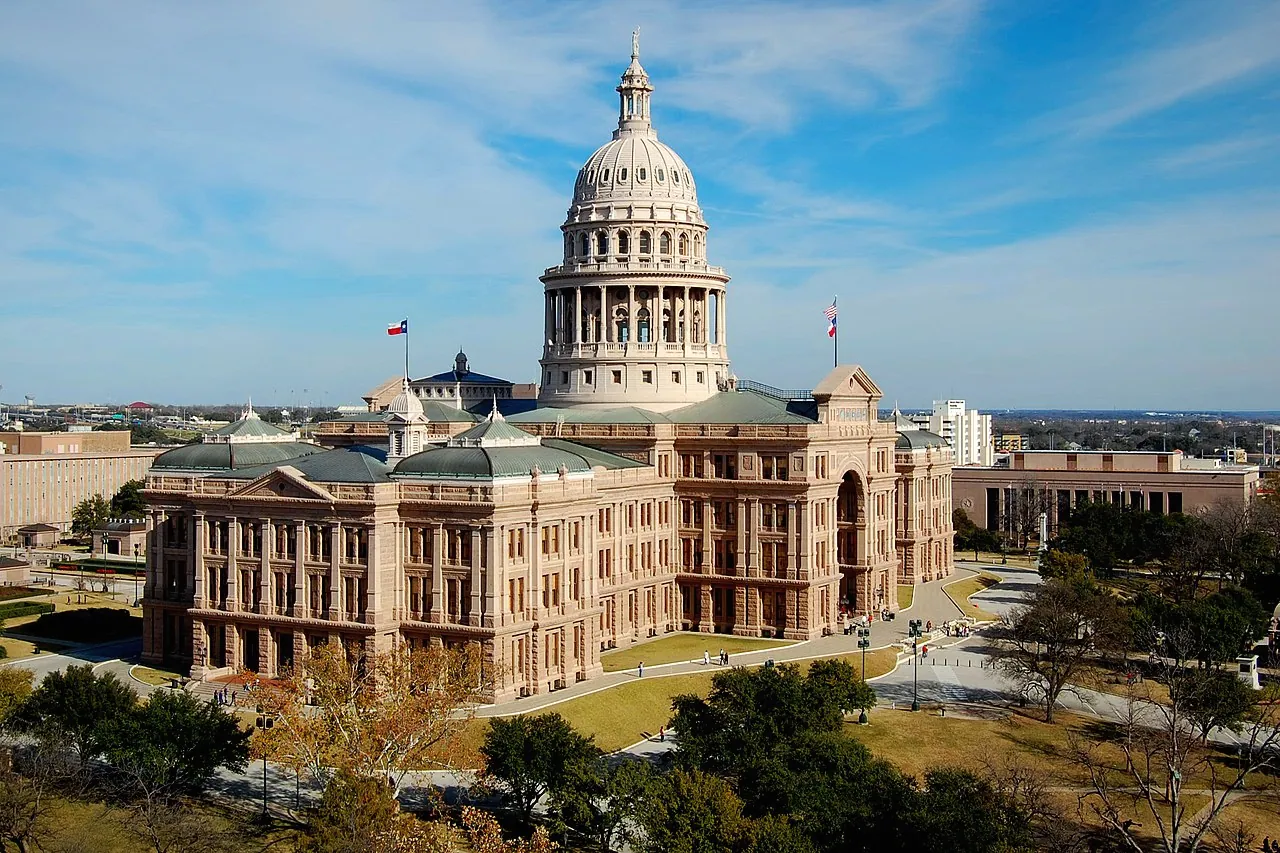
Texas Republicans set out to win five more House seats. They got one.
The Texas Legislature redrew its congressional map in a 2025 special session, after House Democrats left the state to break quorum. The U.S. Supreme Court allowed the map in April 2026, the San Antonio Report noted. On Nov. 3, Republicans flipped TX-32, ABC News projected, while Democrats held most targeted seats and flipped TX-15 and TX-23. The delegation will be 24 to 14 against a goal of 30 to 8, the Texas Tribune reported.
That was the opening move of a map war that spread to a dozen states. ABC News counted 15 seats Republicans redrew nationally and projected Democrats would win 11 of them.
The scorecard
| State | How it redrew | Seats targeted | Nov. 3 result (unofficial) |
|---|---|---|---|
| Texas | Legislature, 2025 special session; Supreme Court allowed map | 5 Democratic seats | GOP projected to flip TX-32 only; Democrats flipped TX-15 and TX-23 |
| California | Legislature plus Prop 50, approved with 64.4% (Nov. 2025) | 5 Republican seats | Democrats flipped all 5, AP reported; ABC still listed 2 as projected |
| North Carolina | Legislature, Session Law 2025-95 | 1 (NC-1) | Rep. Don Davis held, 49.5% to 47.3%; Laurie Buckhout conceded |
| Missouri | Legislature, 2025; voters repealed it by referendum, 61.8% no | 1 (MO-5) | Old map used; Rep. Emanuel Cleaver won, per KCTV5 |
| Ohio | Bipartisan Redistricting Commission deal, Oct. 2025 | 2 (OH-1, OH-9) | Both Democrats projected to win, per ABC |
| Florida | Special session map, April 2026 | 4 | Democrats held FL-14, FL-22 and FL-25; FL-9 not yet projected |
| Tennessee | Special session, May 2026; Shelby County, home to Memphis, split among three districts | 1 (TN-9) | Republican flip: Brent Taylor over Justin Pearson |
| Alabama | 2023 map back in effect after a Supreme Court stay | 1 (AL-2) | Rep. Shomari Figures projected to hold, per ABC |
| Louisiana | New map after the Supreme Court struck LA-6 in Louisiana v. Callais | 1 (LA-6) | Not yet projected |
| Utah | Court-ordered map under Prop 4 | Created 1 Democratic-leaning seat | Democrat McAdams projected in UT-1, per ABC |
| Virginia | Amendment passed 52% to 48%; struck down 4 to 3 by the state Supreme Court | 4 Republican seats | Old map used |
| Indiana | State Senate rejected the map, 31 to 19 | 2 Democratic seats | No new map |
Sources: ABC News, AP, the Texas Tribune, Ballotpedia, KCTV5, WLOS, WYSU, Roll Call, FindLaw, KUER, NPR and Axios. All results are unofficial until each state certifies.
What it cost
This is the column nobody has filled in.
California is the one state with clear numbers. Campaigns raised $172.7 million for and against Prop 50, $125.0 million on the yes side, according to Ballotpedia. That figure does not include what counties spent to run the special election.
Elsewhere, the dollar figures are fragments. Texas House Democrats were fined about $422,000, including state police reimbursement, for the 2025 quorum break, TPR reported. Missouri's referendum committees reported $3.1 million in support and $13.6 million in opposition through Oct. 22 in Ballotpedia's table, though Ballotpedia's own summary and KCTV5 put opposition nearer $7 million. Ad spending in North Carolina's 1st District alone ran "well over $50 million," the AP reported, citing AdImpact.
We could not find a published figure for what any state spent on its redistricting special sessions or on outside lawyers to defend its maps. Those costs sit in legislative budget offices and attorney general contracts, and they are public records.
North Carolina's one seat
North Carolina's map targeted one district. Session Law 2025-95 redrew the 1st District, held by Democrat Don Davis. The Black share of the district fell from 40.42% to 32.34%, WUNC reported.
Sen. Ralph Hise defended the redraw on national terms: "Republicans hold a razor-thin margin in the United States House of Representatives." Sen. Gladys Robinson called it "a calculated move to weaken Black voter representation." A federal panel declined to block the map, writing that the claims "are essentially complaints about partisan gerrymandering," Carolina Public Press reported. Challengers dropped their suits in January 2026, according to Carolina Journal.
Then the voters weighed in. Davis won 148,327 to 141,951 with all precincts in, WLOS reported. "Tonight the voters of eastern North Carolina made their choice, and I respect it," Buckhout said. Davis had said in October, "I'm not here working for any person or party."
Two readings of the same night
The winning side's read came fast. John Bisognano of the National Democratic Redistricting Committee called it "a catastrophic rebuke of Donald Trump's failed effort," the AP reported. Rice University's Mark Jones called it "a complete bust for Republicans."
The other read is owed full strength. Sean Trende of the American Enterprise Institute argues that "Republicans are no worse off than they would have been under the old maps (as of this writing)." The wave, in his view, would have taken those seats under any lines. Adam Kincaid of the National Republican Redistricting Trust described the Texas target plainly: "it was a Herculean task."
Loyola Law School's Justin Levitt split the difference in three words: "districts aren't destiny."
Both readings can be true. The maps did not deliver what their authors promised. And the size of the wave, not only the lines, decided how badly.
What we owe each other
A map is a promise about whose vote will count for how much. Every state on this list spent public time, and often public money, deciding that question between censuses. Voters deserve to know the bill. They also deserve a map they would accept if it were drawn by the other side.
Watch three things: North Carolina's state canvass on Nov. 24, the special session and legal cost records that legislatures have not yet published, and whether any legislature redraws again before 2028.