
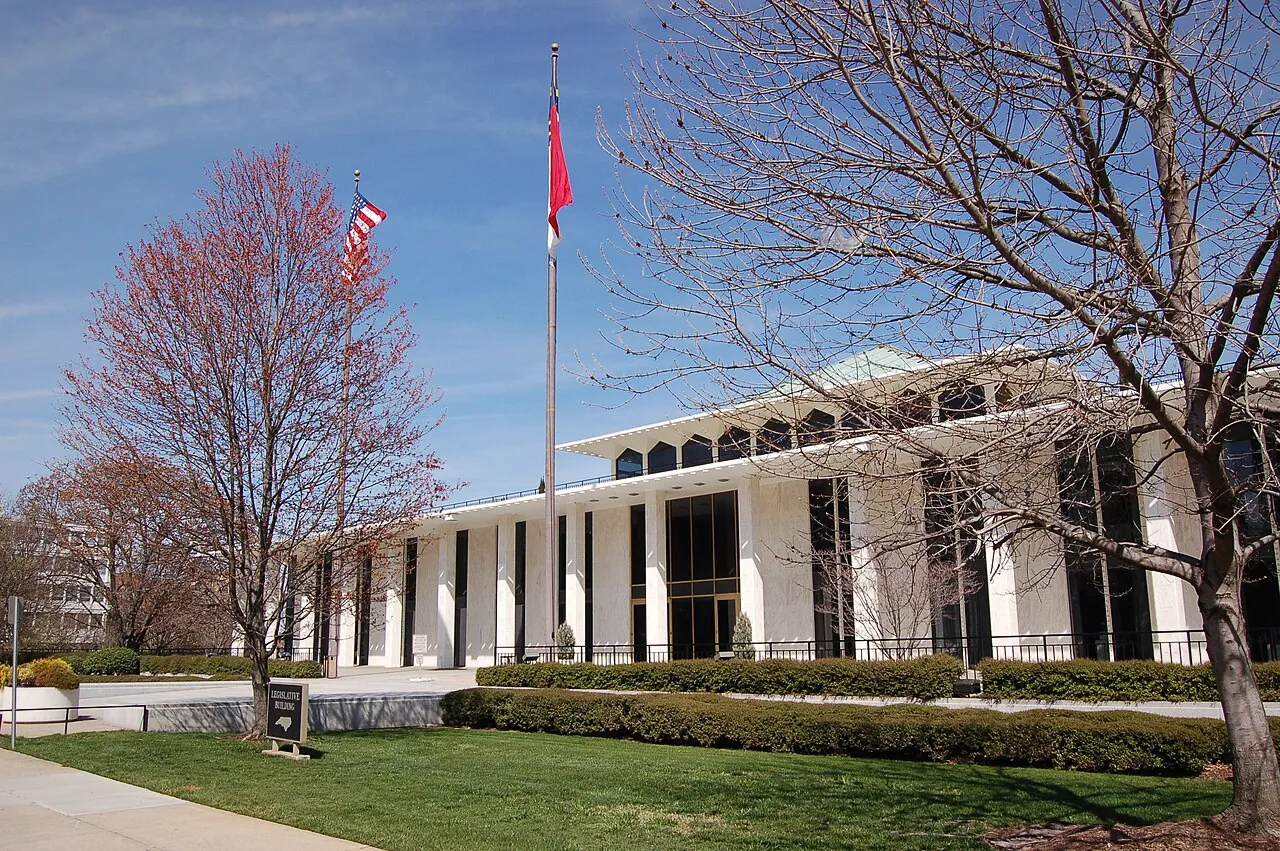
On April 7, 2025, North Carolina House Bill 786 was sent to the House Committee on Rules, Calendar, and Operations. That is the last action on the record, according to the General Assembly's bill page. Its sponsors called it the Working Families Act. It would have raised the minimum wage, expanded affordable housing and brought back a child tax credit.
Nobody voted it down. Nobody had to.
Democrats introduced more than 700 bills that session that were killed in committee, NC Newsline reported. Rep. Lindsay Prather pointed to teacher longevity pay and a $17 an hour floor for non-certified school staff among them.
Call it the drawer. In most statehouses, the most powerful vote is the one never held. A committee chair or a calendar committee decides what reaches the floor, and a bill that never leaves the drawer leaves no fingerprints.
On Nov. 3, voters in five states opened some of those drawers. Not all of them.
Five states, one pattern
| State | What flipped | Blocked before (examples) | Who still holds a key |
|---|---|---|---|
| North Carolina | House to Democrats, first time since 2010 | HB 786; 700+ Democratic bills killed in committee | Republican Senate; GOP lame-duck session from Nov. 16 |
| Texas | House to Democrats; governor and lieutenant governor to Democrats | Medicaid expansion; raising the rifle purchase age | Republican Senate, 19 to 12 |
| Georgia | House to Democrats, first time since 2004; governor and lieutenant governor | Medicaid expansion, in committee and on the floor | Republican Senate, 29 to 27 |
| Pennsylvania | Senate to Democrats; first Democratic trifecta in more than 30 years | $15 minimum wage; adult-use cannabis; background checks | No chamber; a two-seat Senate margin |
| Wisconsin | Both chambers to Democrats; trifecta with Gov.-elect David Crowley | BadgerCare (Medicaid) expansion; marijuana; citizen initiatives | No chamber; amendments need two legislatures plus voters |
Seat counts are unofficial until each state certifies, and several races are within recount range.
North Carolina: a slow decade, then a late budget
By late June 2025, 81 bills had passed both chambers, Bryan Anderson reported in The Caucus. That was the second-fewest since Republicans took control in 2011, against 102 in 2023 and 89 in 2021. By late October, 97 laws had passed, which Anderson said would be the fewest under GOP control if it held, according to WFAE.
The budget came about a year late. The state ran largely at 2025 spending levels while the two Republican chambers fought over tax cuts and raises. The final $34.4 billion plan carried average teacher raises of 8% and an income tax rate of 3.99%, WFAE reported. Gov. Josh Stein signed it in July, according to a Williams Mullen review of the session.
House Democratic Leader Robert Reives summed up 2025 for WUNC: "The big picture theme, I would say, is getting nothing done."
Now Democrats hold 71 of 120 House seats, according to ABC11. Republicans will need Democratic votes to override a veto. That means Stein's vetoes can stand. It does not mean HB 786 passes, because every Democratic House bill still goes to a Republican Senate.
The nearest risk is the lame-duck session that opens Nov. 16. Override votes on concealed-carry permits, a homeless camping ban and a DEI ban were on the table, WUNC reported in August. Stein's view, after the election: "It's not necessary that they actually come back in a lame duck session."
Texas: lots of laws, a short list of locked doors
Texas is not gridlocked by volume. In the 2025 regular session, 8,719 bills were filed and 1,187 became law, according to the Texas Legislative Reference Library. The block was selective.
Medicaid expansion is the clearest case. Sen. Nathan Johnson's SB 232 got no committee hearing, Cover Texas Now reported. Rep. John Bucy's expansion amendment to the budget failed 63 to 85. In 2023, a bill raising the age to buy a semi-automatic rifle to 21 cleared committee, then missed the Calendars Committee deadline and died, KUT reported.
If results hold, Democrats go from 62 House seats to 83, against 67 Republicans, the Texas Tribune reported. Gov.-elect Hinojosa will be able to veto bills and strike budget lines. Lt. Gov.-elect Goodwin will preside over a Senate that stays Republican, 19 to 12.
That Senate is the new drawer. The lieutenant governor's power comes from the Senate's own rules, and Quorum Report said Republicans were weighing cuts to it, KUT reported. Nothing has been adopted. House Democratic Caucus Chair Gene Wu said members will start right away "on the things we have been fighting for all these years."
Georgia: one vote of air
Georgia's blocked agenda runs through Medicaid. In 2024, an expansion bill tied 7 to 7 in a Senate committee, and the chair broke the tie against it, the AJC reported. In 2025, a Democratic subsidy pilot never got a hearing. In February 2026, Senate Republicans rejected Democratic amendments to add expansion to SB 440, the Georgia Recorder reported.
Democrats now hold the House, reaching at least the 91-seat majority mark, Atlanta News First reported. The Senate stays Republican, 29 to 27. A bill needs 29 votes, so one absence matters. Lt. Gov.-elect Josh McLaurin told Atlanta News First: "Somebody could be in the bathroom or go to a doctor's appointment."
Gov.-elect Keisha Lance Bottoms said "expanding Medicaid and fully funding pre-K and fully funding education will be a priority in that first budget," according to an AJC column.
Pennsylvania: the drawer is gone
Pennsylvania enacted 65 laws in 2025, its lowest count in at least a decade, Spotlight PA reported. The budget for the 2025 to 2026 fiscal year arrived months late.
The House kept passing bills the Senate would not touch. A $15 minimum wage passed the House 102 to 101. In the Senate, a Democratic motion to force a vote failed 23 to 27, the Pennsylvania Capital-Star reported. Sen. Christine Tartaglione said it had been "7,297 days since this legislature last passed a minimum wage." The cannabis bill, HB 1200, passed the House 102 to 101 and died 7 to 3 in a Senate committee. Universal background checks passed the House 104 to 99 and never got Senate action, WITF reported.
Democrats now hold 26 of 50 Senate seats and 111 of 203 House seats, according to the Capital-Star. Gov. Josh Shapiro told WHYY the day after: "We will raise the minimum wage."
Wisconsin: the vetoes stop, the hearings start
In the 2023 to 2024 session, Gov. Tony Evers signed 272 bills and vetoed 73, PolitiFact Wisconsin found. In May 2025, the Republican-run budget committee cut more than 600 items from his budget, including Medicaid expansion and marijuana legalization, the AP reported. When Evers proposed citizen initiatives, Assembly Speaker Robin Vos said, "Dead on arrival."
Democrats now hold the Senate 18 to 15 and the Assembly 53 to 46, Wisconsin Watch reported. Gov.-elect Crowley: "For the first time since 2010, Wisconsin voters will trust us to lead."
The case for the drawer
The Republican case is owed full strength.
First, a low bill count is not failure. North Carolina Senate leader Phil Berger rejected judging a session that way: "I don't accept the characterization." He noted that "a number of things have been rolled into conference reports," The Caucus reported. House Speaker Destin Hall said, "I don't know that it's that much different."
Second, a committee that kills a bill is doing its job. Rep. Dustin Burrows, then Calendars chair in Texas, defended the age of majority on guns, saying rights "vest at the age of 18," KUT reported. Georgia Sen. Ben Watson warned about cost: "I have no idea what Medicaid explosion would cost us now."
Third, many Democratic bills were written to message, not to pass. Pennsylvania Senate Majority Leader Joe Pittman said most House Democratic bills moved "with little, if any, collaboration from Republicans," according to Spotlight PA.
That argument has weight. A drawer can protect a state from bad bills. The question is whether it protected anyone from these.
What can pass now
Here is the picture if the new majorities hold together. These are possibilities, not predictions.
- Pennsylvania has no drawer left. A minimum wage increase, adult-use cannabis and background checks could all reach the governor in 2027. One Senate defector can still stop a bill.
- Wisconsin can revisit the budget items cut in 2025, starting with Medicaid expansion. A constitutional amendment still needs two consecutive legislatures and a statewide vote.
- North Carolina gets a veto that sticks, not an agenda that passes. HB 786 still needs the Senate.
- Texas gets a House that can block and a governor who can veto. Medicaid expansion still needs a Republican Senate.
- Georgia gets the House and the governor's office. Medicaid expansion still needs a Senate with two votes of cushion.
Where Democrats won both chambers, the drawer is gone. Where they won one, it just moved across the hall.
What we owe each other
Go back to HB 786 and the people it was written for: the school custodian, the cafeteria worker, the parent counting on a child tax credit.
Scanlon's test asks whether we could justify a choice to the person with the least power, on grounds she could not reasonably reject. A vote against her raise passes that test or fails it in the open. A bill left in a drawer never has to face her at all.
That is the real cost of the drawer. Not the bills that lose. The bills that are never made to stand in front of the people they were written for.
Watch three dates. Nov. 16, when the North Carolina lame-duck session opens. Dec. 1, Georgia's House District 151 runoff. And January, when Pennsylvania's first trifecta in more than 30 years shows whether an open drawer gets emptied.
Denzel D. Burnside III is the founder and editor of The State, a 50-state statehouse desk based in Raleigh. A former organizer and campaign manager from Miami-Dade, he also leads the North Carolina Housing Table as executive director.