
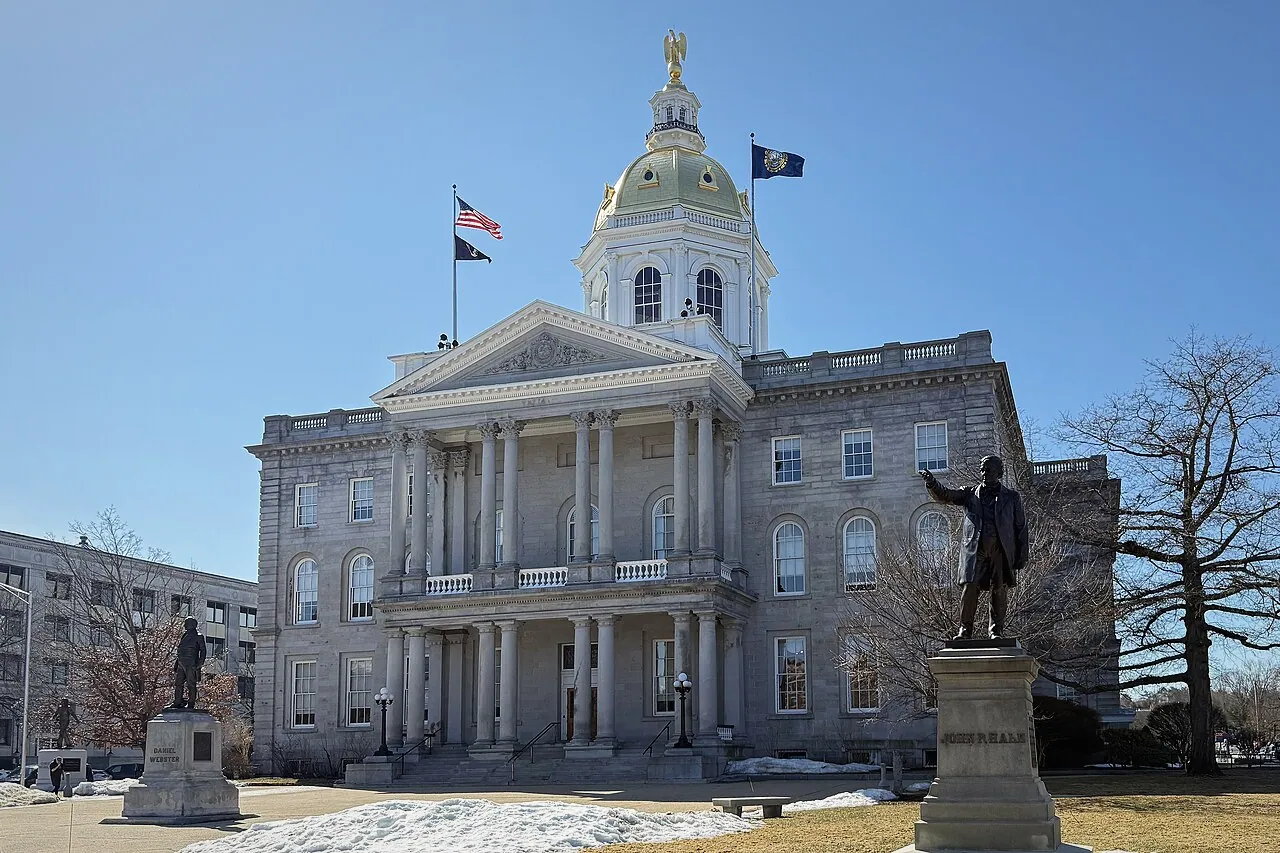
On Nov. 3, New Hampshire voters handed their 400-seat House to Democrats. A preliminary count reported by the Boston Globe gave Democrats 291 seats, well past the 234 they won in 2018. WCAX called it the first Democratic House supermajority ever. House Clerk Paul Smith told New Hampshire Public Radio the number could reach 292, and warned that recounts could still move it.
The Senate flipped too. The AP projects 15 Democrats and 9 Republicans, NHPR reported, one seat short of a two-thirds majority in the 24-seat chamber. And the five-member Executive Council, which votes on the governor's judicial nominees, is projected to go all Democratic. Before the election it had one Democrat.
One thing did not change. Republican Gov. Kelly Ayotte won a second term. New Hampshire now has a Republican governor facing a Democratic legislature and a Democratic council.
Who leads
Rep. Alexis Simpson leads House Democrats, per NHPR. "House Democrats are already rolling up our sleeves to bring costs down and deliver concrete results for Granite Staters," she said. Senate Democrats were set to choose their leaders after the election, WCAX reported.
Sen. Sue Prentiss of Lebanon, reelected to a fourth term and now in the majority, read the result as a verdict on direction. "Residents are finally saying, 'I don't think this is going in the right direction; it is time for a change,'" she told WCAX.
Where power actually moves
The governor still holds the veto. What changed is the math around it. With a House supermajority and a Senate near two-thirds, Democrats can override Ayotte's vetoes with little Republican help, the Globe reported. That turns every veto into a negotiation rather than a wall.
The quieter shift is the Executive Council. It votes on the governor's nominees for the state Supreme Court, and Ayotte has not yet named a successor to Chief Justice Gordon MacDonald, who resigned in September, according to the Globe. Councilor Karen Liot Hill, until now the council's only Democrat, said it will insist on "some very clear standards." Councilor-elect Jim O'Connell said judicial picks should be made without regard to "political affiliation," NHPR reported.
School money is the policy fight underneath. Republicans have asked the state Supreme Court to overturn rulings that New Hampshire underfunds public schools, the Globe reported. Rep. David Luneau of Hopkinton called education funding and property taxes a top priority: "The voters have spoken."
The Republican case
Ayotte struck a cooperative tone. "I believe in our state and our people, and together we will work to make life more affordable for everyone," she said in a statement, naming housing, child care and energy prices, per WCAX.
House Majority Leader Jason Osborne of Auburn offered the sharper read. Democrats won "an election cycle," he told the Globe, not the argument. "Two years is not a long time," he said. "Granite Staters have short patience for politicians who raise their taxes." Republicans plan to run on fiscal restraint in 2028.
That is a fair warning in a state where, as Luneau's own priority list shows, school funding and property taxes are tied together. A supermajority that reaches for new revenue would test it fast.
What to watch
- Organization day: the House elects its speaker and the Senate its president.
- The first veto: whether Ayotte uses it and whether Democrats override.
- The chief justice nomination: what standard the new council applies.
- School funding: whether the new majority settles the court fight with a budget instead of a ruling.
Divided government is the system working as designed. New Hampshire's version now puts a governor's signature on one side and nearly three-quarters of the House on the other. Who blinks first will tell voters more than any campaign ad did.
Results are unofficial until each state certifies them. This piece is part of The State's series on the 12 legislative chambers that changed party control on Nov. 3, all of them to Democrats, according to Ballotpedia. For the overview, read The Flip.